Selling or Buying
Buying a Los Angeles Property With Unpermitted Structures or Code Violations
Unpermitted work or open violations make LA properties trade at a discount. See how to evaluate the risk and the cost to clear it before you sign.
Updated
AB 2533 in Los Angeles
California’s amnesty law allows qualifying pre-2020 units to become fully legal without penalty fees. We evaluate your property in complete privacy and map out your best financial options.
Is this you?
Tens of thousands of Los Angeles properties carry an unpermitted unit. These are the situations we see most often, and each one has a proven path forward.
No letters from the city, no drama. You simply want to stop thinking about it. That is the best position to be in, because the amnesty window is open now and you get to move on your own terms.
See the legalization pathDeadline
A Notice of Violation, fines, an open enforcement case. This is a parallel track with its own deadlines, not a dead end. Timing matters here more than anything else.
Use the urgent pathDecide before you list whether to legalize, sell as-is, or disclose. Wait too long and the buyer's inspector makes that decision for you.
What sellers must discloseOrder an assessment before your offer to see the true cost picture and walk into negotiations with leverage. You do not need to own the property yet.
How buyers price the riskRoom additions and conversions can often be permitted as ADUs, which puts them on the amnesty path. Confirming whether yours qualifies is part of the assessment.
Legalizing an additionThe date is usually provable through historical satellite imagery, assessor records, old listings, and dated photos. Building that timeline is part of the assessment.
How the 2020 cutoff worksYour options
Every unpermitted unit resolves through one of three paths. The feasibility assessment identifies yours and maps exactly what it takes to finish it.
Path 1
Qualifying ADUs and JADUs built before 2020 can be legalized under the state amnesty framework. When your unit meets the criteria, this is the most direct route to a clean permit.
Explore the legalization pathPath 2
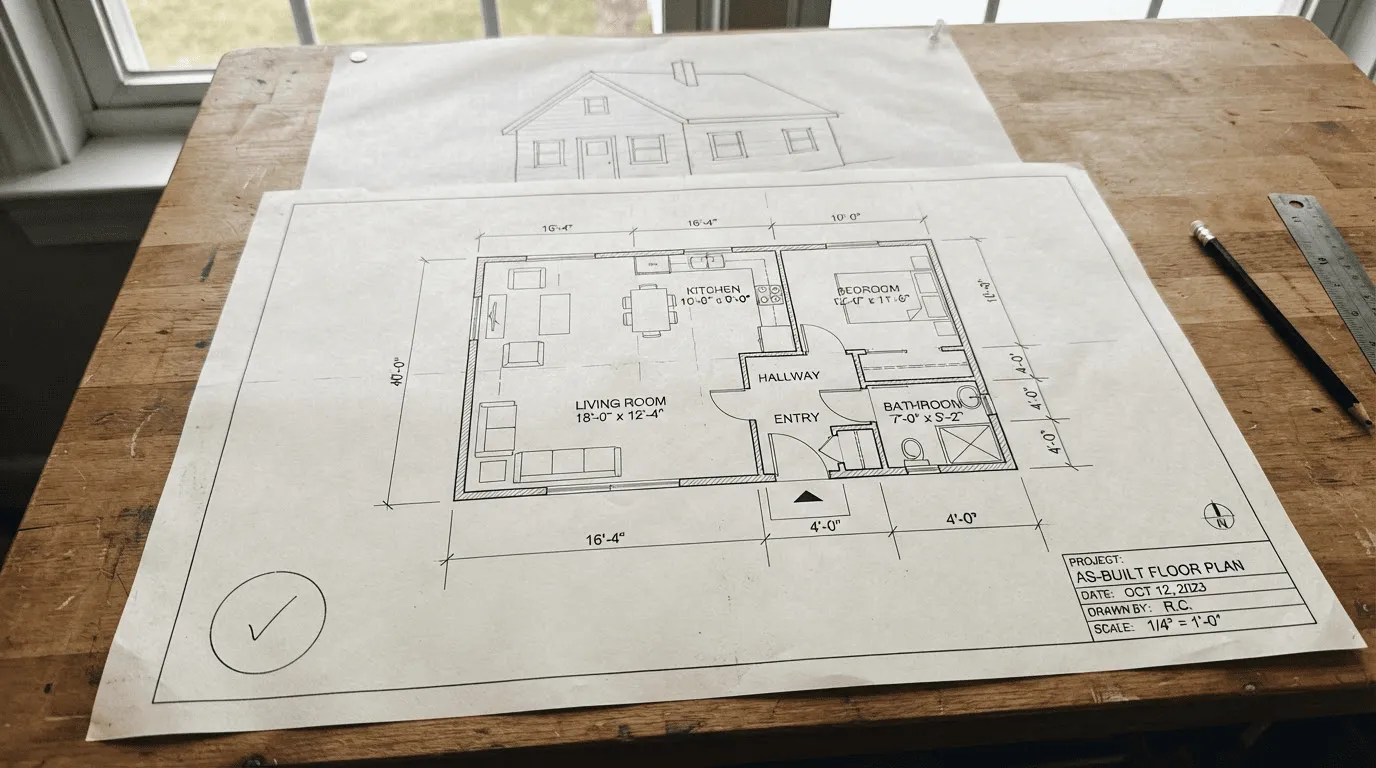
Units that fall outside the amnesty criteria can still be permitted as-built: plans drawn from existing conditions, corrections where required, then a final inspection.
How as-built permits workPath 3
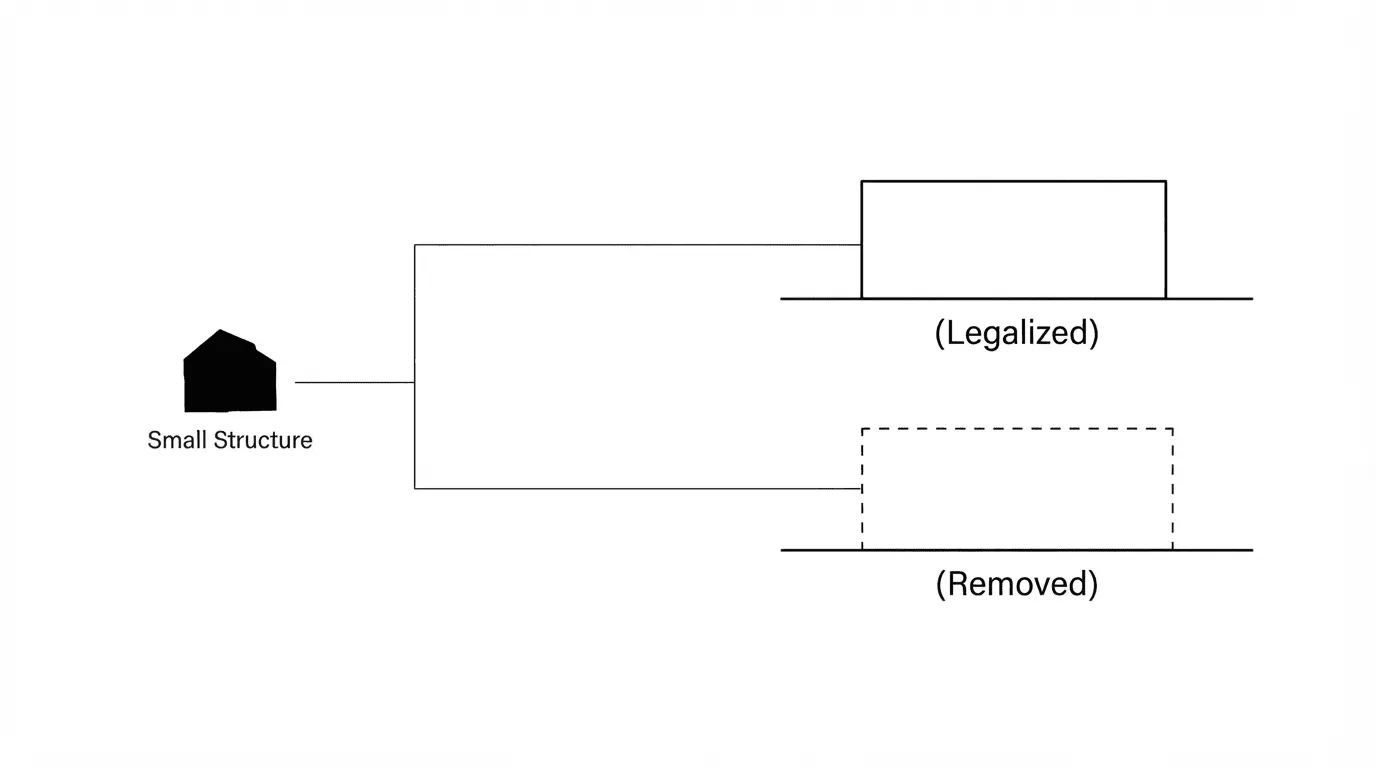
When legalization doesn't pencil out, a documented removal closes the liability cleanly and keeps the rest of the property marketable. We put this route on the table only when the numbers favor it, and the final call always stays yours.
When removal is the better call
How it works
No surprises along the way. Nothing touches city systems until you decide.
15 to 60 min
Instant email with your intake link. Your address carries over from checkout, so nothing is entered twice.
1 to 2 weeks
Which path applies, what it costs, and how long it takes, delivered as a written PDF report by email.
2 to 3 weeks
As-built plans are prepared and the application moves through the city with our partners or yours.
Ongoing
Corrections completed, inspections passed, and the unit is legal on record.
Pricing
Every tier starts with the same confidential analysis. The difference is whose eyes review it and how deep they look.
Choosing the wrong path costs tens of thousands. Knowing your path costs $550. Every tier credits toward the next.
Tier 1
$550
Remote review of your documents and photos. You get the path, a step by step plan, and preliminary cost ranges for legalize, remove or sell.
Choose this tierMost popular
Tier 2
$850
Everything in Preliminary, plus an independent desk review of your materials by a licensed engineer.
Choose this tierTier 3
$1,650Zone 1
A licensed engineer visits the property. Their findings go straight into your action plan.
Choose this tierThe cost of waiting
All three are avoidable. That is the point of knowing your path.
One complaint from a neighbor or tenant can open a case. From there it runs on the city's schedule instead of yours: orders, escalating fines, and possibly forced vacancy.
What a notice meansUnpermitted square footage surfaces in disclosures and appraisals. Deals fall apart, prices get cut, lenders walk.
Selling with unpermitted workA claim involving an unpermitted unit gives the carrier grounds to deny coverage, sometimes beyond the unit itself.
See the assessmentsReal cases, licensed hands
Between January 2025 and May 2026, our team and partner contractors worked through unpermitted-structure cases across greater Los Angeles. Some were brought to us by other licensed contractors who had the license but not the path. Several arrived with city fines already stacking and decisions that could not wait.
The outcomes were different on purpose. Some units were legalized. Some came down. In one Thousand Oaks case, the unit was built after the 2020 amnesty cutoff, the city was pressing, and the numbers showed legalization would cost more than it would return. So the owner sold at a negotiated discount and closed the case before the fines grew. The job of the assessment was to make that call clear in time.
In 2026 we turned this into a dedicated service, because the problem across Los Angeles is enormous and most owners either do not know it is solvable or fear that asking will expose them. Asking will not. Nothing we do touches city systems until you decide.

Alex Vesa, Case Lead
Every assessment is led by Alex, who has taken cases through every outcome since early 2025: legalization, removal, and sale.
Independent Licensed Engineer
Joins on tiers two and three under their own license. Experienced specifically in legalization cases, which few engineers take on.
Licensed Contractor Partners
Construction, when needed, is done by licensed contractors, ours or yours. Primary partner: Kobzev Pro Contracting Group Inc., verifiable through CSLB public records (CSLB #1148495), alongside other vetted partners. The assessment itself stays with us.
Guides
Selling or Buying
Unpermitted work or open violations make LA properties trade at a discount. See how to evaluate the risk and the cost to clear it before you sign.
Updated
Violation Notice
A lien on an unpermitted structure does not mean tearing everything down. See your real options to clear the case and protect the property in LA.
Updated
Violation Notice
Got an LADBS Notice of Violation or Order to Comply? See what it means, the deadlines that apply, and how the case actually gets closed.
Updated
Legalization
Need a retroactive permit or Certificate of Occupancy to rent, sell, or refinance in LA? See the process, the cost drivers, and the cheaper AB 2533 path.
Updated
Selling or Buying
Selling an LA home with an unpermitted garage, addition, or ADU? You must disclose it. See how it affects the sale and why to run the numbers first.
Updated
Remove or Demolish
Tear it down or legalize it? It is an outcome comparison, not a price one. See how to run the numbers for your unpermitted garage or addition in LA.
Updated
AB 2533 (Government Code §66311.7) lets owners permit an unpermitted ADU or JADU that was built before January 1, 2020, judged on basic health and safety instead of today's building code. Garage conversions that became living units count. Plain room additions and anything finished after the cutoff do not. Here is how it works.
Yes. A pre-2020 ADU, JADU or garage conversion can go through AB 2533. Everything else goes through a retroactive, or as-built, permit: as-built plans, inspections, and corrections to meet current code. How retroactive permits work.
There is no flat price. The total is as-built plans, permit and plan check fees, and whatever corrections the inspection calls for, most often an egress window, smoke and CO alarms, and electrical fixes. Under AB 2533, impact and connection charges are waived for qualifying pre-2020 units. Your assessment gives you preliminary ranges for your property.
Months, not weeks. The clock runs on plan check and inspection cycles at the building department, plus the time it takes to do the corrections. The assessment itself comes back within 12 days of a completed intake.
No. An assessment is a private analysis of your property and documents. Nothing is filed with the city until you decide to go ahead. For pre-2020 units, the right to a confidential third-party inspection before applying is written into §66311.7.
Confidential Feasibility Assessment
Confidential at every step: which path applies, realistic preliminary costs, and a written plan. No city filings, no obligation.
Prefer to talk? (747) 351-0050Mon to Fri, 7am to 5pm
We could not send your request.
Please try again, or call (747) 351-0050, Mon to Fri, 7am to 5pm.