The worst thing you can do is ignore it. The second worst is assuming that paying the fine makes it disappear. Neither is true, and both will cost you heavily. Here is what the notice actually means, the clock you are now on, and how the case gets closed. We evaluate your situation privately, and nothing gets filed with the city until you explicitly decide to proceed.
What the Notice Actually Is
In the City of Los Angeles, the Department of Building and Safety (LADBS) issues an Order to Comply. This is a legally binding command to correct the violation by the compliance date printed on the order. In unincorporated LA County, the Department of Regional Planning issues a Notice of Violation first as a formal warning. If it is ignored, they follow up with a Final Zoning Enforcement Order, which is the hard deadline.
Either way, the case almost always starts from a complaint. The source of that complaint stays strictly confidential.
The Clock You Are On
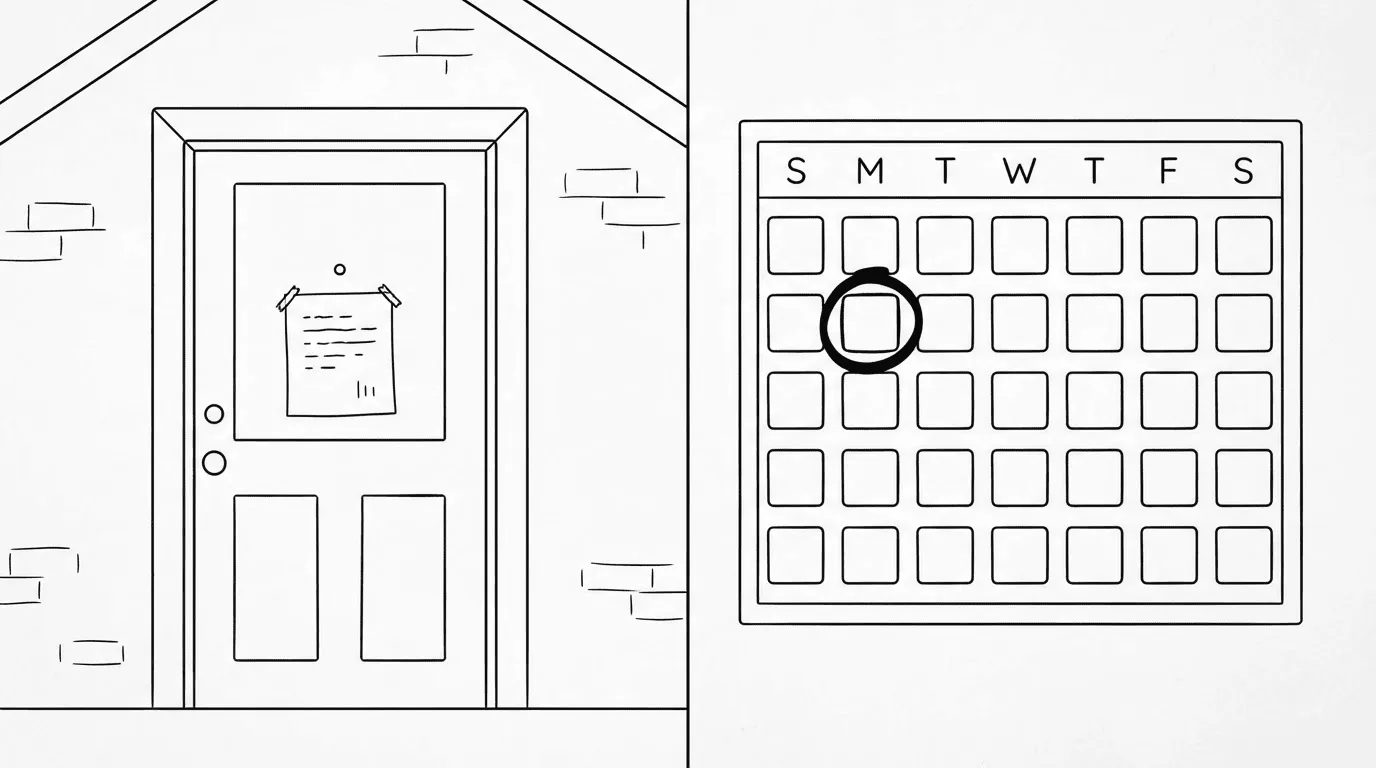
The compliance date is printed on the order itself. That is your primary deadline to fix the violation, pull permits, or challenge the order. The threshold that matters most comes next. In the City, you have a 15-day window after the compliance date before the $660 Non-Compliance Fee is assessed under LAMC §98.0411. In the County, the notice and any Final Zoning Enforcement Order state their own response and appeal windows.
These dates are not suggestions. Fees escalate once these dates pass. The order must be read first, and your calendar is built directly from it.
Paying the Fine Does Not Close the Case
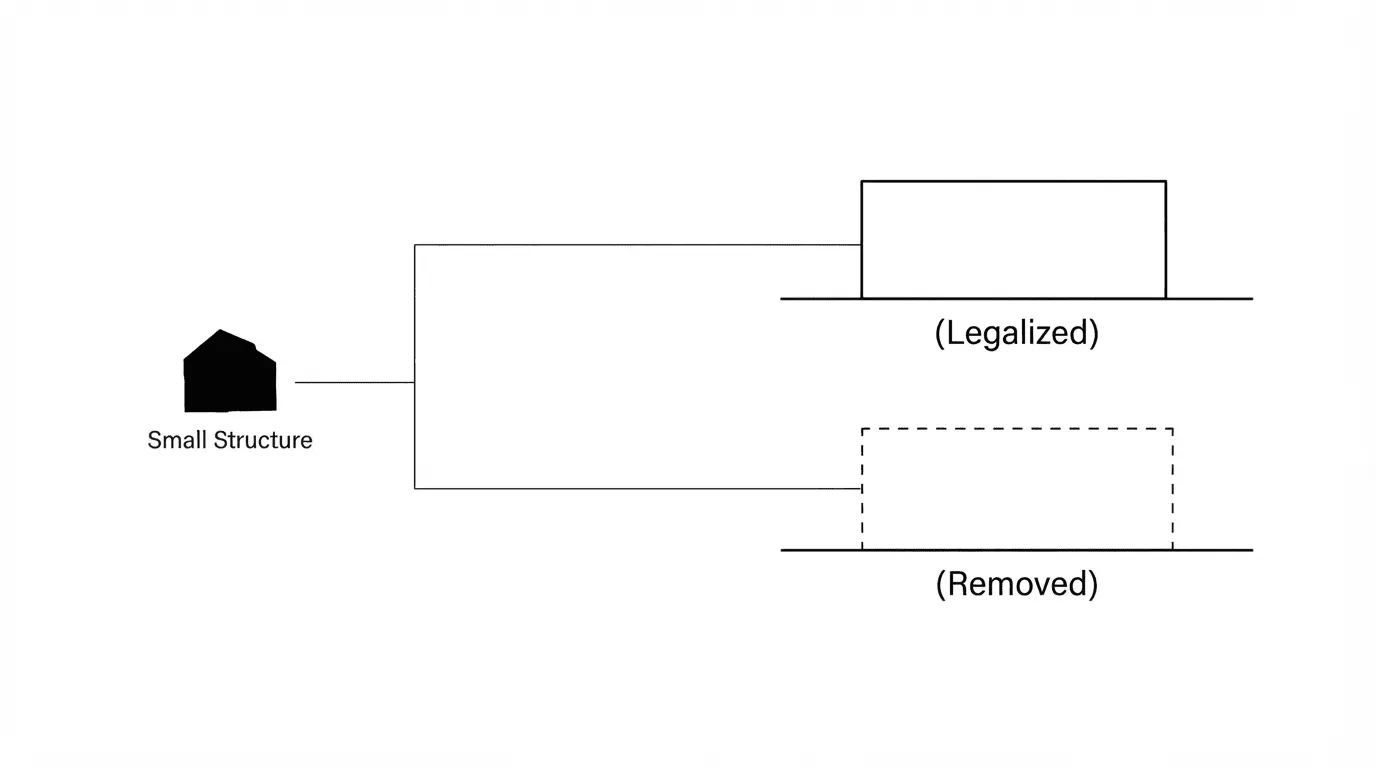
This is the most expensive misunderstanding owners make. Paying the assessed fees does not clear the violation. The case stays open and keeps accruing consequences until the unpermitted work is actually legalized or removed and a final inspection signs off.
People pay the fees, assume they have settled the issue, and discover months later that the case is still active. The only thing that closes the case is fixing the underlying physical problem.
What It Costs If You Let It Run
In the City, the fees stack quickly. These are the published figures from LADBS. A Code Violation Inspection Fee of $356.16 is assessed when the Order to Comply is issued under LAMC §98.0421. This is owed even if you comply on time. If paid late, it grows to $1,246.56.
If the violation is not corrected within 15 days of the compliance date, a Non-Compliance Fee of $660 follows under LAMC §98.0411. If left unpaid for 30 days, it escalates to $2,310 with late penalties. When a permit is needed for the fix, an investigation fee doubles the permit fee with a $400 minimum under LAMC §98.0402.
On top of the fees, an uncorrected violation is prosecutable as a misdemeanor under LAMC §11.00(m). The administrative citation track under LAMC Art. 1.2 runs $250, $500, and $1,000 per violation under the general schedule. Each day a violation continues counts as a separate violation. The County runs its own escalating penalties, ending in a referral to County counsel. The cost of waiting climbs fast.
Your Real Exits
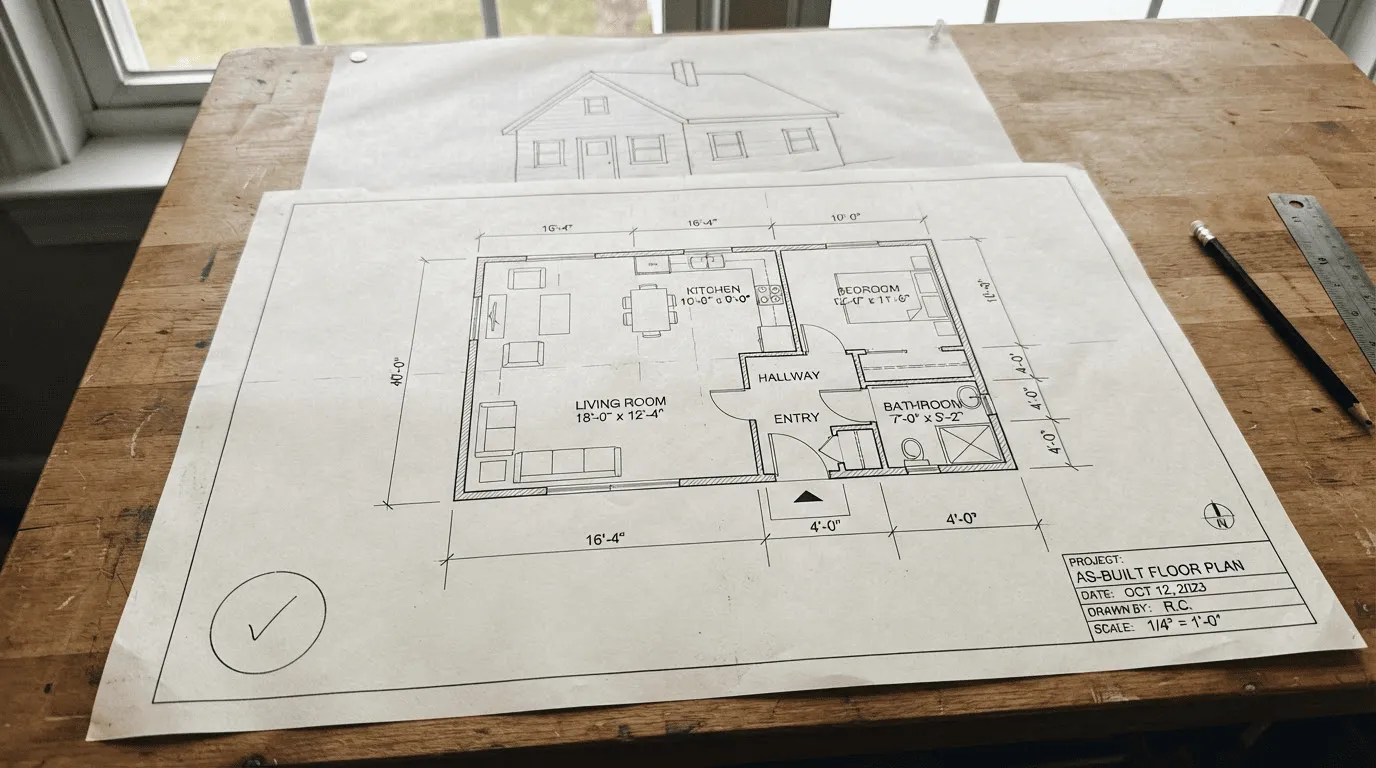
- Legalize it: Pull a retroactive as-built permit, make the corrections the inspection requires, pass the final inspection, and get the sign-off that closes the case.
- Remove and restore: Pull a demolition permit, remove the unpermitted work, restore the property to its permitted condition, and pass the final compliance inspection.
- AB 2533 (pre-2020 units): If the structure functions as an ADU or JADU and was built before January 1, 2020, it is judged on basic health and safety rather than current code. Impact and connection charges are waived under Government Code §66311.7. This is far cheaper and faster than the standard route when it applies.
How to Buy Time Legally
You are not powerless against the deadline. In the City, you can request an extension of time from the assigned inspector. The Modification Fee is $346.62 in most cases under LAMC §98.0403.1. You do this by showing a compliance plan or an active permit application. LADBS fees and orders can also be appealed to the Board of Building and Safety Commissioners within the window stated on the order under LAMC §98.0403. In the County, the enforcement order states its own appeal path and deadline.
If the structure is an ADU, Health & Safety Code §17980.12 gives a qualifying owner the right to request a delay of building standards enforcement while the unit is brought into compliance. This is a second protective layer alongside §66311.7. The two are applied to the specific facts of your case and are not interchangeable. The common thread is that you must act before the deadline, not after.
What Happens If You Ignore It
Two outcomes make ignoring a notice dangerous. If the property is a rental, persistent violations can push it into REAP. This is the Rent Escrow Account Program where tenants’ rent is redirected into a city escrow account instead of going to you. You only exit REAP after the violations are fixed and the exit is formally approved.
Separately, unpaid fees can become a lien recorded against your title. This blocks a clean sale or refinance until the debt is cleared. Both outcomes are far more expensive than simply resolving the violation early.
The Confidential First Step
Before the deadline forces your hand, find out what closing the case actually requires without adding exposure. An assessment reads the order, maps your exits, and prices them against each other. For a pre-2020 unit, the right to a private third-party code inspection before filing anything is written into §66311.7 itself.
If you are on a live enforcement clock, say so when you order. Deadline cases run on an expedited custom track with its own terms.
The order sets your deadline. The assessment sets your plan. Three assessment tiers start at $550, and every tier credits toward the next.