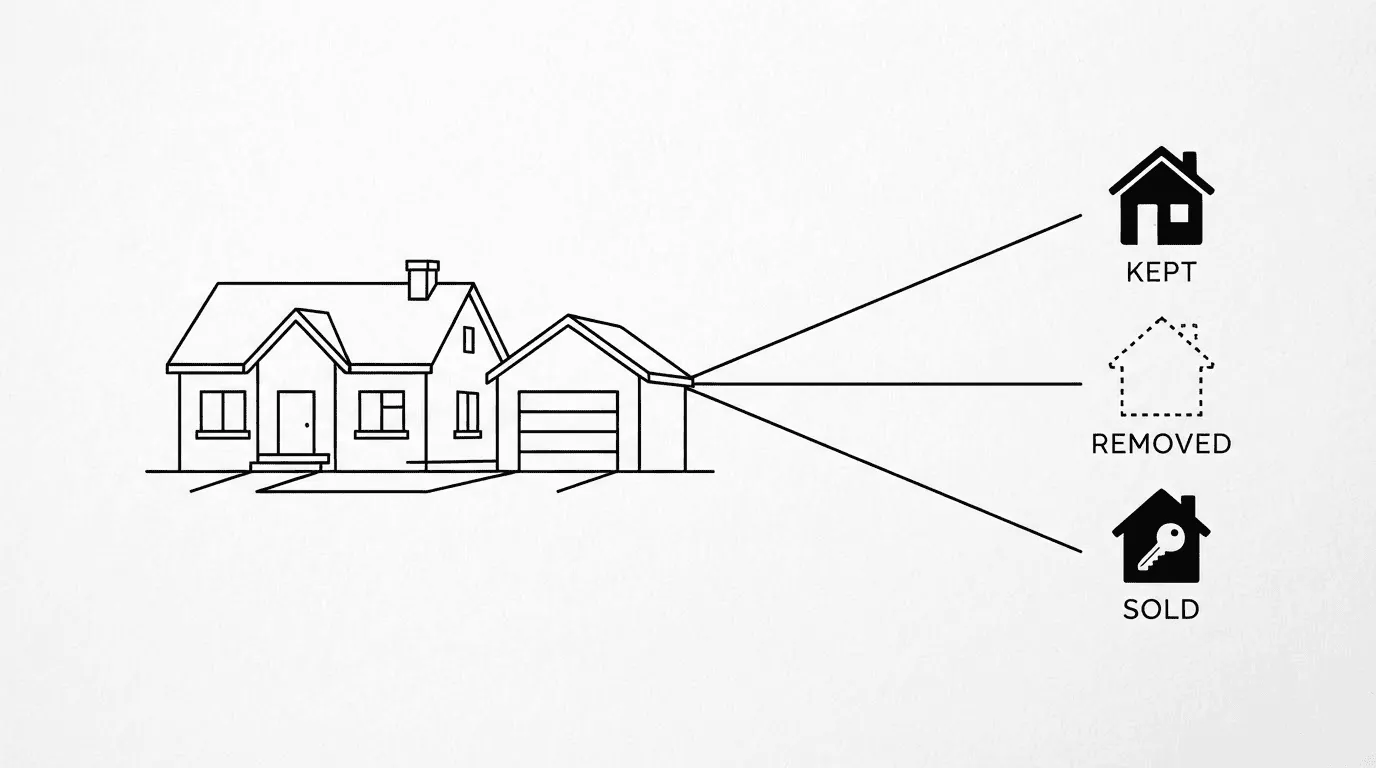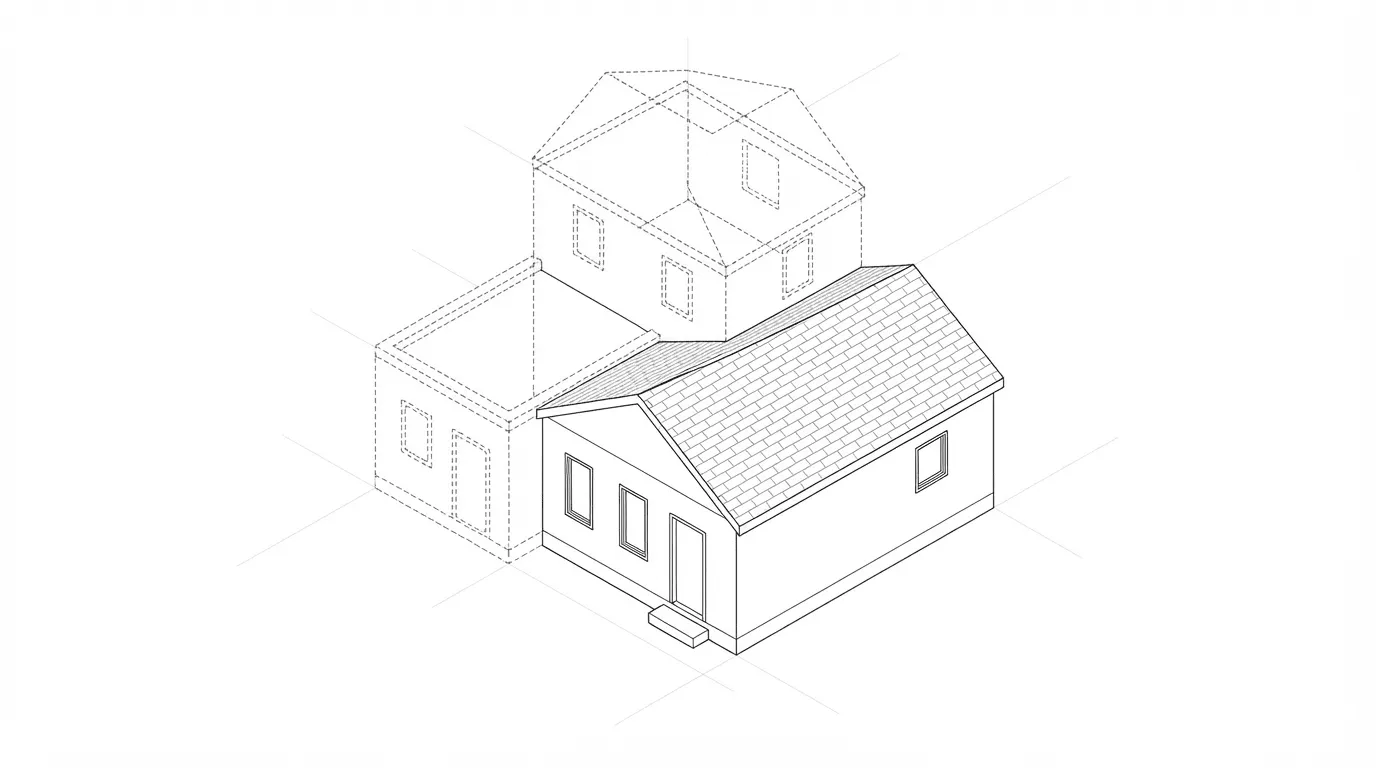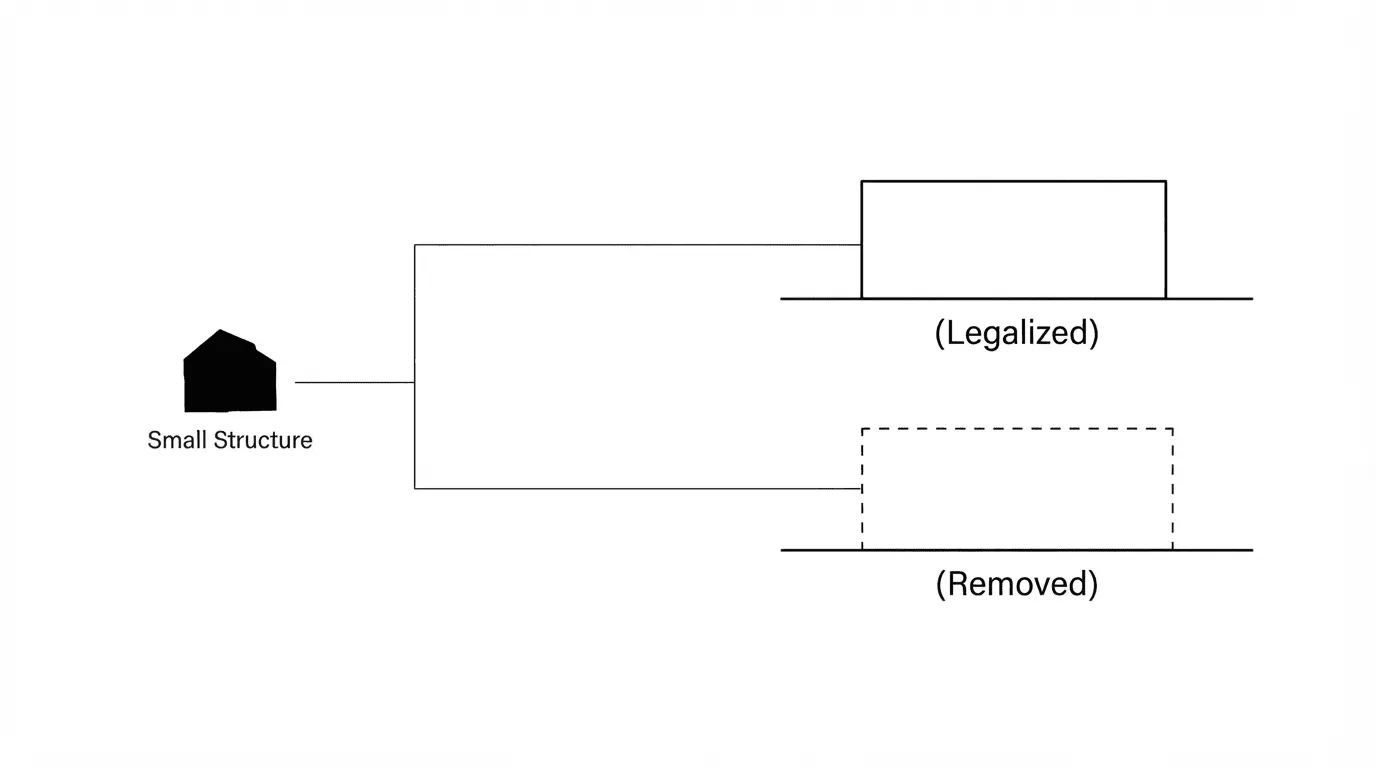
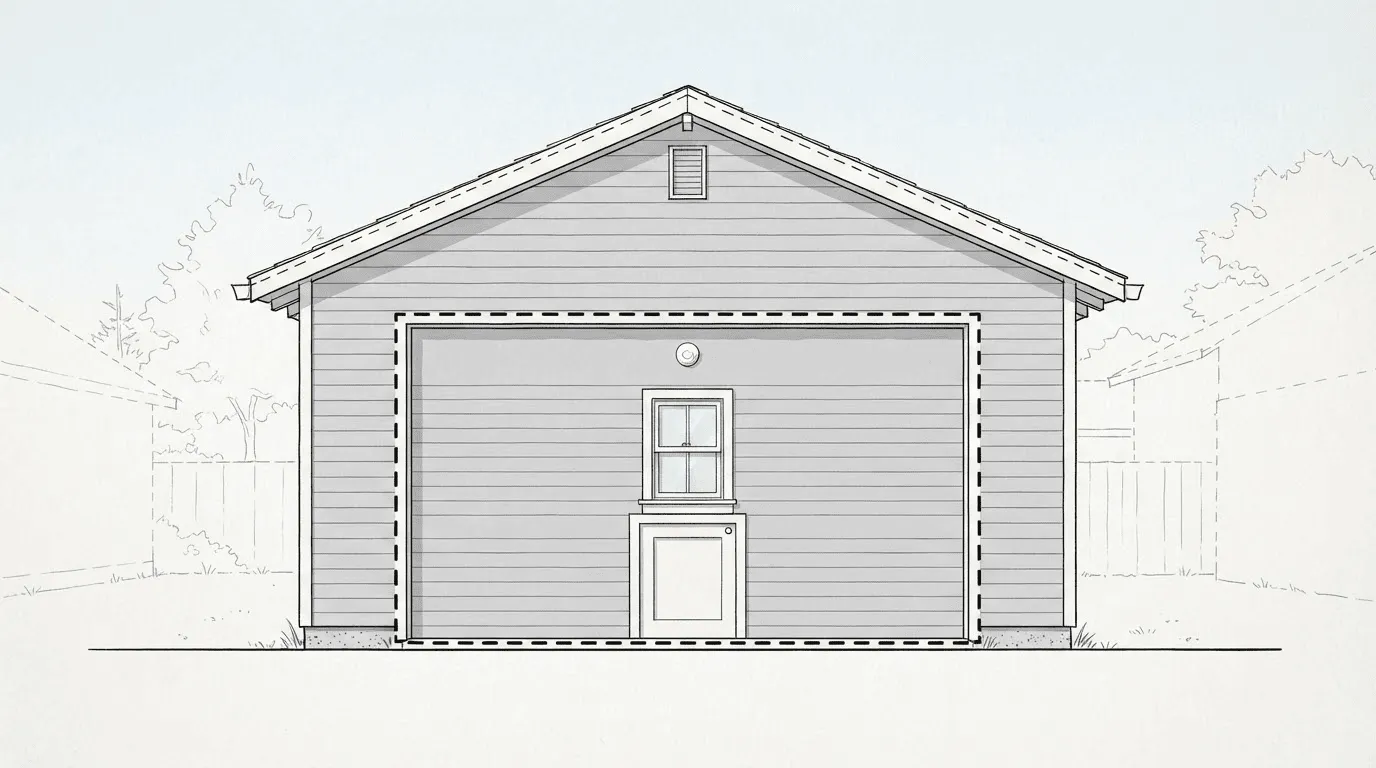
The right move depends on your situation. You can legalize, remove the structure cleanly, or sell. Permit Amnesty is a confidential assessment service built around that decision. We tell you which path actually pays off for your property. If you decide to build, licensed contractor partners handle the work. You can use ours or bring your own.
The first step is a paid, confidential assessment with three tiers starting at $550. Your privacy is guaranteed. Nothing is filed with the city until you explicitly decide to proceed.
What AB 2533 Changed
AB 2533 was signed on September 28, 2024, and took effect on January 1, 2025. It is codified at Government Code §66311.7 (formerly §66332). You may still see older sources citing §66332.
For an unpermitted ADU or JADU built before January 1, 2020, the city cannot deny a permit simply because the unit violates building standards or does not comply with state ADU law. The only grounds for denial are a finding that the unit is substandard under Health & Safety Code §17920.3 or that correcting a specific violation is necessary to protect health and safety.
In plain terms, the city cannot force you to rebuild to today’s energy and structural rules for a qualifying older unit. They cannot make you correct setbacks where the unit already stands, and they cannot demand replacement parking for a converted garage. Before this law, legalizing meant full current code compliance. That is why it was so expensive and why most owners never did it.
Does Your Structure Qualify?
The critical factor is the build date. AB 2533 covers unpermitted ADUs and JADUs built before January 1, 2020. You prove the unit existed before then with documents such as County Assessor records, old utility bills, escrow paperwork, real estate transfer disclosures, code enforcement records, signed leases, or dated aerial and satellite imagery.
If your structure was built after that cutoff, you are not out of options. There is a separate retroactive path available, which we cover below.
What the City Cannot Require (For a Pre-2020 Unit)
- Current building and energy code: The permit cannot be denied because the unit violates building standards, including today’s structural and energy rules. The unit is judged against the §17920.3 substandard standard instead.
- Setbacks: The permit cannot be denied because the unit, in its existing location, does not comply with state ADU standards or the local ordinance.
- Replacement parking: State ADU law bars a replacement parking requirement when a garage, carport, or covered space is converted for an ADU. SB 1211 extended that protection to uncovered spaces as well.
What You Do Have to Fix
AB 2533 focuses on life safety, so the unit still has to be safe to live in. Judged against the §17920.3 substandard housing standard, the corrections that typically come up include:
- Working smoke and carbon monoxide alarms inside and outside sleeping areas.
- An emergency egress window in every sleeping room with a minimum net clear opening of 5.7 square feet.
- Proper sanitation, including a working toilet, sink, and kitchen sink with hot and cold running water.
- Adequate heating and ventilation.
- Correction of exposed or hazardous electrical wiring and repair of any structural deterioration.
Two Layers of Law and Why It Matters
AB 2533 is not the only statute on the books for older unpermitted ADUs. Health & Safety Code §17980.12 is an earlier law that lets the owner of a qualifying unpermitted ADU ask the enforcement agency to delay building standards enforcement for five-years while the unit is brought into compliance.
Government Code §66311.7 goes further. It requires the city to issue a permit for a qualifying pre-2020 unit unless the unit is substandard. Current state guidance, including an MTC/ABAG memo from March 2026, notes that the interaction between these two sections is complex. One allows delayed enforcement of code upgrades, while the other bars requiring those upgrades for the permit at all.
For an owner, this means there are two distinct protective tracks. Which one your case should lean on depends on the facts: the build date, the condition of the unit, and whether enforcement is already open. Our assessment accounts for both layers instead of assuming one applies.
Fees: What Is Waived
Under §66311.7, a homeowner applying to permit a previously unpermitted pre-2020 ADU or JADU cannot be charged impact fees or connection and capacity charges. The one exception is a connection fee where new utility infrastructure is genuinely required to resolve a specific health and safety condition. Standard permit and plan check fees still apply. Final fees and requirements are set by the local building department.
Built After January 1, 2020? The Retroactive Path
A unit built after the cutoff does not qualify for AB 2533. It has to be legalized through a standard as-built retroactive permit, which means meeting current building codes. That often involves destructive testing to open finished walls and ceilings so an inspector can verify the hidden framing, wiring, and plumbing. A setback violation can be a hard stop without a rarely granted variance.
It costs more than the AB 2533 route, but for many owners, it still beats selling at an as-is discount. Part of our assessment is telling you honestly which situation you are in.
Legalize, Remove, or Sell: The Real Decision
The goal is not always to legalize. It is to pick the exit that fits your situation and your timeline. That is what the assessment is for. It runs the numbers on three real paths:
- Legalize (AB 2533 Amnesty or As-Built Permit): Best when you want maximum value, rental income, or to refinance.
- Remove & Restore: Best when legalization is not possible due to severe hazards or a post-2020 setback violation. A permitted removal by a licensed contractor clears the violation from your record. This is not a cash-and-haul job.
- Sell As-Is: Best when you need speed or have no capital. The property is sold with full disclosure or to a cash buyer.
Whichever way the numbers point, the final call is always yours.
Why Legalizing Usually Wins
When a unit qualifies, the economics usually favor legalizing. Appraisers and lenders count permitted square footage. Unpermitted space is typically excluded from the official living area and can be treated as a liability. It has to be disclosed at sale, and it narrows the pool of buyers who can finance the property.
A permitted unit can be rented, refinanced against, and counted at appraisal. The property tax effect is narrower than most owners fear. Under Prop 13, legalizing triggers a reassessment of the added value of the unit only. Your existing tax base is not reassessed. The assessment puts preliminary numbers on each path for your specific property.
The Cost of Doing Nothing
Leaving it unpermitted carries real, verifiable exposure. These are the City of Los Angeles’ own published figures for a code enforcement case:
- An Order to Comply triggers a Code Violation Inspection Fee of $356.16 (LAMC §98.0421). This is owed even if you fix the violation on time. Paid late, it grows to $1,246.56.
- Miss the compliance date by 15 days and a $660 Non-Compliance Fee follows (LAMC §98.0411). Unpaid for 30 days, it escalates to $2,310 with late penalties.
- When a permit is needed to fix the violation, an investigation fee doubles the permit fee with a $400 minimum (LAMC §98.0402).
- The City can also issue administrative citations (LAMC Art. 1.2). Under the general schedule, fines are $250 for a first violation, $500 for a second, and $1,000 for a third and beyond. Each day a violation continues counts as a separate violation.
- An uncorrected violation is also prosecutable as a misdemeanor (LAMC §11.00(m)), and unpaid fees can become a lien recorded against title.
Beyond the fee schedule, a rental with open violations can be pushed into REAP (the city’s rent escrow program). Renting an unpermitted unit exposes you to tenant claims. At sale, appraisers exclude unpermitted square footage, which leads to loan denials and collapsed escrows.
The Confidential First Step: Three Tiers
The law itself builds in the confidential first look. For a pre-2020 unit, §66311.7 requires cities to inform homeowners that they may obtain a confidential third-party code inspection from a licensed contractor before submitting anything. The results are a resource for the owner, not a filing. Permit Amnesty is built around that principle across every path.
We offer three assessment tiers. Each is delivered as a written PDF report and includes a 15-minute call to walk through your results or a written Q&A session.
- Preliminary Assessment ($550): A remote analysis of your property. We determine which path it is on (AB 2533 amnesty, standard as-built permit, or removal), provide a step-by-step action plan, and outline the legalize vs remove vs sell economics with preliminary market ranges.
- Engineer-Reviewed Assessment ($850): Everything in the Preliminary tier, plus an independent desk review of your materials by a licensed engineer. We identify engineering red flags and confirm if the chosen path holds up from a structural standpoint.
- On-Site Engineering Assessment ($1,650 in Zone 1): A licensed engineer visits the property, and their findings are built directly into your action plan. Pricing varies by travel zone.
The engineer gives an independent professional opinion on the structure as it stands. It informs your decision, while the final permit call always belongs to the city. Structural plans and calculations are a separate service.
Every tier credits into the next. Choosing the wrong path costs tens of thousands. Knowing your path costs $550.
If You Decide to Build
The assessment is independent. It is not a bid for construction work. If your path involves construction, licensed contractor partners build. You can use ours or yours. Our primary construction partner is Kobzev Pro Contracting Group Inc., a California licensed Class B general contractor (CSLB #1148495). Partners travel up to about 150 miles for the right project. You are equally free to take your report to any licensed contractor you choose.
How the Permitting Process Works
Where the application is filed depends on your address. In the City of Los Angeles, applications go to LADBS through the ePlanLA portal. In unincorporated LA County, they go to LA County Public Works through the EPIC-LA portal.
A complete AB 2533 application includes proof of the pre-2020 build date, a completed substandard conditions checklist, dimensioned as-built floor plans, a site plan showing boundaries and setbacks, and exterior elevations. If you continue past the assessment, the as-built plans and filings are prepared by the licensed professionals on your path.
Related Laws Worth Knowing (2024 to 2026)
- SB 1211: Allows up to eight detached ADUs on multifamily lots and bars replacement parking demands when parking is removed for an ADU.
- AB 1332: Requires jurisdictions to offer pre-approved ADU plans with a 30-day decision timeline.
- AB 1033: Lets cities allow ADUs to be sold separately as condominiums.
- Prop 13: Legalizing reassesses only the added value of the unit. Your existing tax base is not reassessed.