Here is how unpermitted work affects a sale in LA. The way to come out ahead is to run your numbers before you list, which is what a Permit Amnesty assessment does. We evaluate your situation privately, and nothing gets filed with the city until you give the green light.
You Have to Disclose It
Under California Civil Code §1102, unpermitted work is a material fact. You are required to disclose it on the Transfer Disclosure Statement (TDS) and the Seller Property Questionnaire (SPQ). The TDS asks directly about additions, structural changes, and work done without permits. The SPQ digs deeper into the property history. This duty is non-waivable under §1102.1. A buyer cannot sign it away, even on an as-is deal. The legal standard is what you knew or should have known.
If you are reselling a property you recently bought and renovated, AB 968 goes even further for resales within 18 months. You must disclose the work done, including contractor information and permit status. Your real estate agent or attorney handles the forms themselves. What matters here is that the work simply cannot be hidden.
An “As-Is” Sale Will Not Protect You
A common and expensive belief is that selling as-is removes the obligation to disclose or shields you from a lawsuit afterward. California courts have rejected that idea for decades. Under cases like Lingsch v. Savage and Shapiro v. Hu, an as-is clause only waives implied warranties and the duty to make repairs. It does not protect a seller who conceals a known material defect. Checking “No” on the TDS about a garage you know was converted without permits is not a loophole. It is actionable fraud.
What It Costs You at Sale
Unpermitted work hits your final price through three distinct mechanisms.
First, at appraisal, the unpermitted square footage is typically excluded from the official living area. The house is valued as if the space were not even there. Second, where there are safety concerns, appraisers can apply a cost-to-cure deduction straight off the value. This is their estimate to legalize or remove the work. Third, a marketability discount applies. Buyers hesitate, and the ones who remain will negotiate hard.
How deep the total cut runs depends on what the work is, how visible it is, and whether a code enforcement case is already open. Our assessment estimates this discount for your specific sale before you pick a strategy.
It Can Also Kill the Buyer’s Loan
Even a willing buyer can lose their financing over this. Conventional lenders might accept workmanlike unpermitted work, but an illegal use under zoning can sink the loan outright. This happens when you have an unpermitted second unit where zoning does not allow one.
FHA and VA loans apply strict minimum property requirements. Safety issues like exposed wiring or missing egress windows can trigger repair conditions before the loan will fund. When financing options collapse, your buyer pool shrinks to cash buyers and large-down-payment buyers. Fewer bidders always means a lower final price.
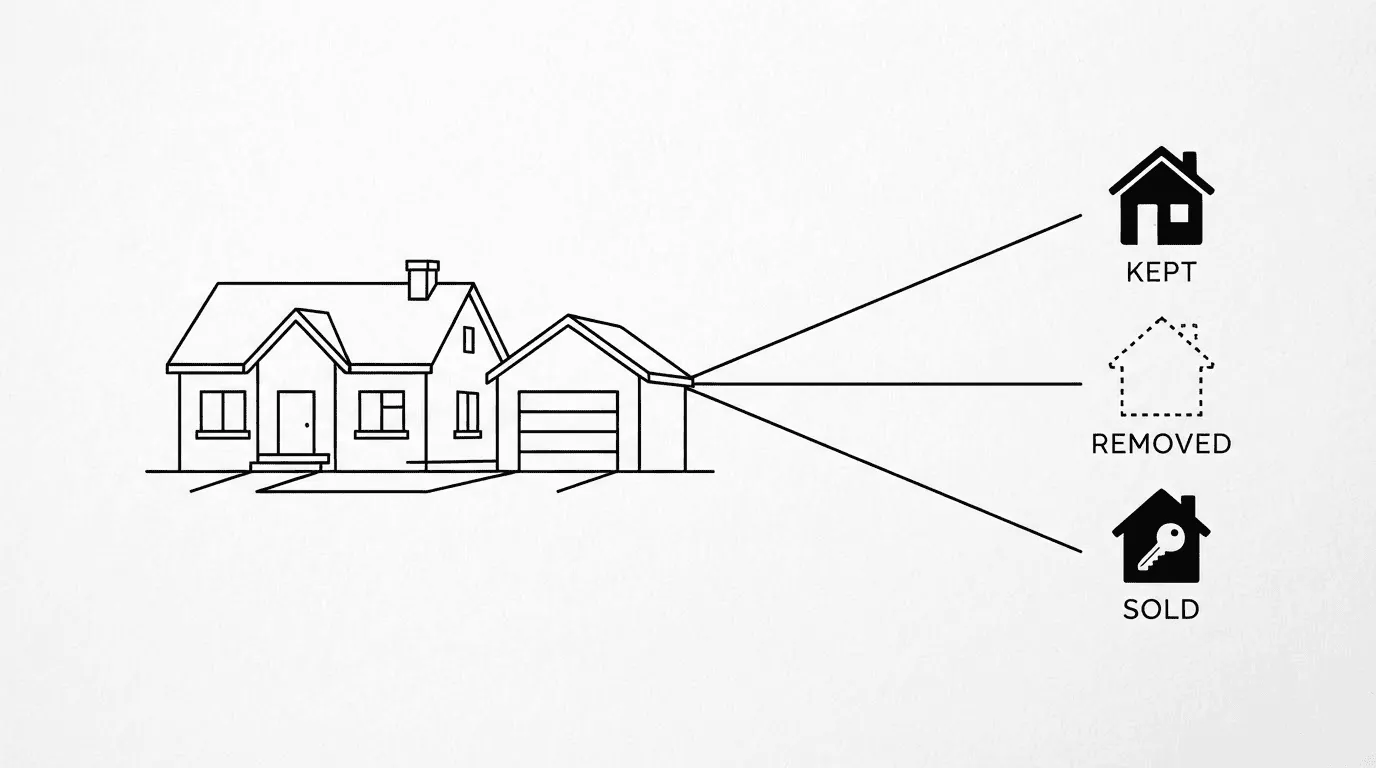
Your Three Strategic Options
- Legalize before listing: This captures the full value of the space and reopens the financed-buyer pool. A standard retroactive permit takes real time and money. However, for a qualifying pre-2020 unit, AB 2533 makes it far cheaper and faster.
- Sell as-is on the MLS: You list the legal square footage with full disclosure. You take a discount, but you get a market-speed closing.
- Sell to a cash buyer or investor: This is the fastest close with no appraisal contingency, but it comes with the steepest discount.
Why Legalizing First Usually Wins
Run the numbers and the answer is often obvious. What unpermitted status takes off at the closing table is frequently a multiple of what it costs to fix. You spend less to legalize than you give up to sell around it, and you sell at full value to a full pool of buyers.
Under AB 2533, the case is even stronger. A qualifying pre-2020 ADU, JADU, or garage conversion is judged on basic health and safety rather than current code. The cost-to-cure drops to life-safety work, impact and connection charges are waived, and the marketability cloud lifts. The financed buyers come right back to the table. Whether that math holds for your house is a question with a hard number attached to it. The assessment runs it before you list.
The Real Risk of Hiding It
Concealing known unpermitted work is not a strategy. It is a liability that follows you long after closing. A buyer who discovers it can sue for fraudulent concealment. Remedies include out-of-pocket damages under Civil Code §3343, rescission that unwinds the sale entirely, and potentially punitive damages.
The clock favors the buyer. The fraud claim runs from when they discover the problem, up to three years after discovery. You also cannot pin it on someone else. The fault of the contractor who skipped the permit or an agent who knew can be legally attributed to you.
You Stay Anonymous While You Decide
An assessment is simply an analysis of the property based on records, listing materials, and photos you already have. Nothing is filed with the city, no inspector shows up unannounced, and what you do with the report is entirely your business. For a pre-2020 unit, the right to a private third-party code inspection before filing anything is written into §66311.7 itself.
Taking the First Step Confidentially
Before you decide anything, get the cost-to-cure versus discount math for your specific sale.
Three assessment tiers start at $550, and every tier credits toward the next.