In this guide, I break down what this means for your property. We will look at qualification criteria, what inspectors actually check, and how the costs break down. At Permit Amnesty, we provide private assessments to help you decide whether to legalize, remove, or sell before any paperwork hits the city desk. Nothing gets filed until you give the green light.
Why garage conversions are the easiest case under AB 2533
Most garage conversions follow a predictable pattern. They feature a solid, permitted shell with approved framing and roofing, combined with unpermitted interior upgrades like drywall, electrical work, or even a bathroom and kitchenette. AB 2533 (Government Code §66311.7) was designed specifically for this scenario.
For qualifying units built before January 1, 2020, the city evaluates them against the substandard housing criteria in Health & Safety Code §17920.3 instead of the current building code. This shifts the focus from trying to pass a rigorous 2026 inspection from scratch to simply proving the space is safe for habitation. That is a lower and cheaper bar to clear.
The amnesty covers units, not rooms
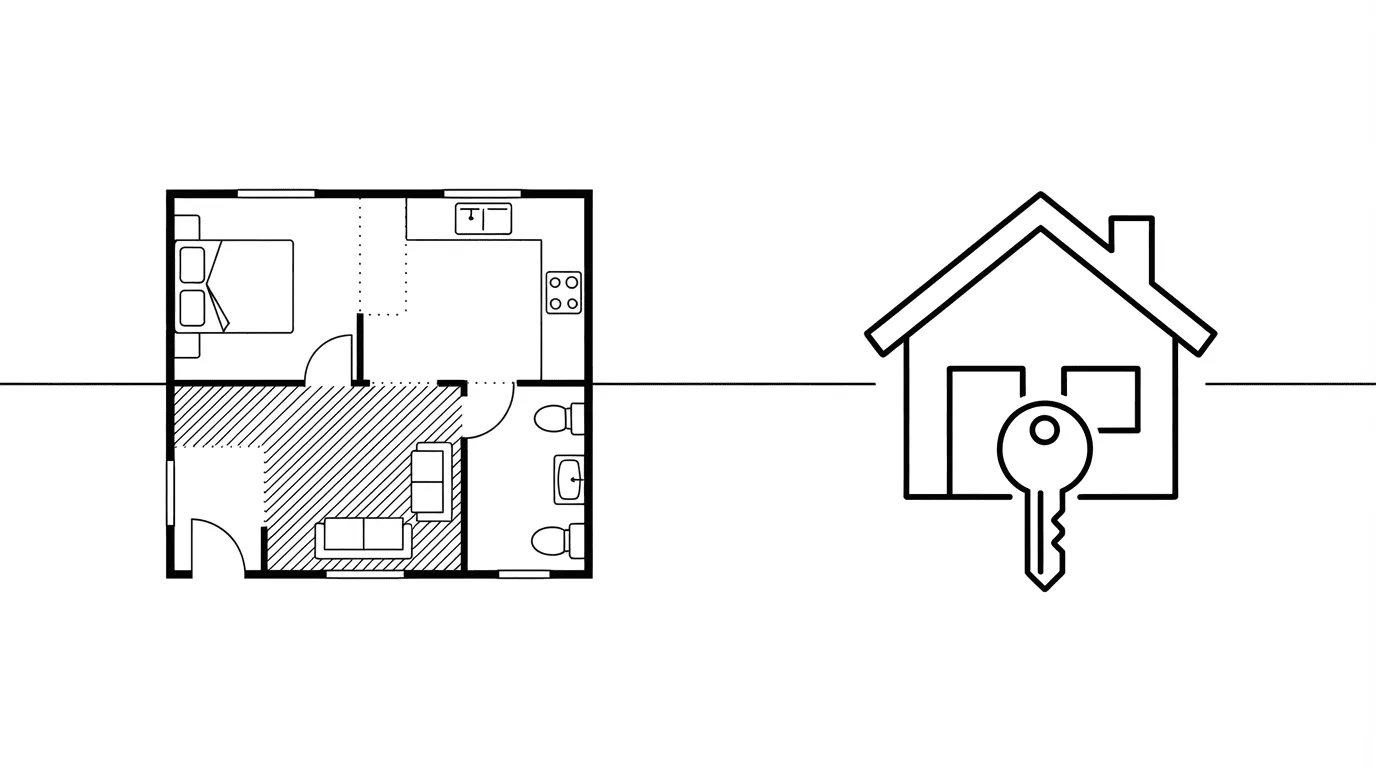
This amnesty applies to independent living units, not just extra rooms. A garage turned into a studio, a bedroom with an en-suite bathroom, or a full unit with a kitchenette fits the definition of an ADU or JADU. However, if you merely converted the space into a home gym or a storage room, it does not count as a dwelling unit. That type of project requires a standard as-built permit. Determining whether your specific project meets the legal definition of a unit under Gov. Code §66313 is the very first step in our assessment process.
The parking misconception
Owners often worry about parking. They assume the city will force them to restore the garage or create a new parking spot elsewhere on the lot. For a qualifying conversion, this simply is not true. State ADU law explicitly prohibits the city from demanding replacement parking when a garage, carport, or covered space is converted into an ADU. Furthermore, SB 1211 extended this protection to uncovered spaces. This removes the biggest obstacle that historically forced people to revert their conversions instead of legalizing them.
Does your garage conversion qualify?
Eligibility hinges entirely on the completion date of the conversion, not the date you purchased the property. AB 2533 covers units finished before January 1, 2020. We prove this timeline using County Assessor records, old utility bills, escrow documents, transfer disclosures, code enforcement files, leases, or dated satellite imagery. We never rely on verbal claims. If the work happened after the 2020 cutoff, it falls outside AB 2533 and requires a standard retroactive permit to meet current code. That process is more involved, but often still worth it.
What an inspector looks for in a converted garage
Since AB 2533 focuses on life safety, the required corrections aim to make the space safe rather than forcing a complete rebuild. When inspecting a converted garage, we typically see the following issues:
- Egress: Sleeping rooms require an emergency escape window with a minimum net clear opening of 5.7 square feet. Garages rarely have these, making it the most common addition.
- Alarms: You need working smoke and carbon monoxide alarms inside and outside the sleeping area.
- Electrical: Informal wiring is common in DIY conversions. Any exposed or hazardous wiring must be corrected.
- Sanitation: If the space functions as a full unit, it needs a working toilet, sink, and kitchen sink with both hot and cold water.
- Heating and ventilation: The space must have adequate heat and airflow to be legally habitable.
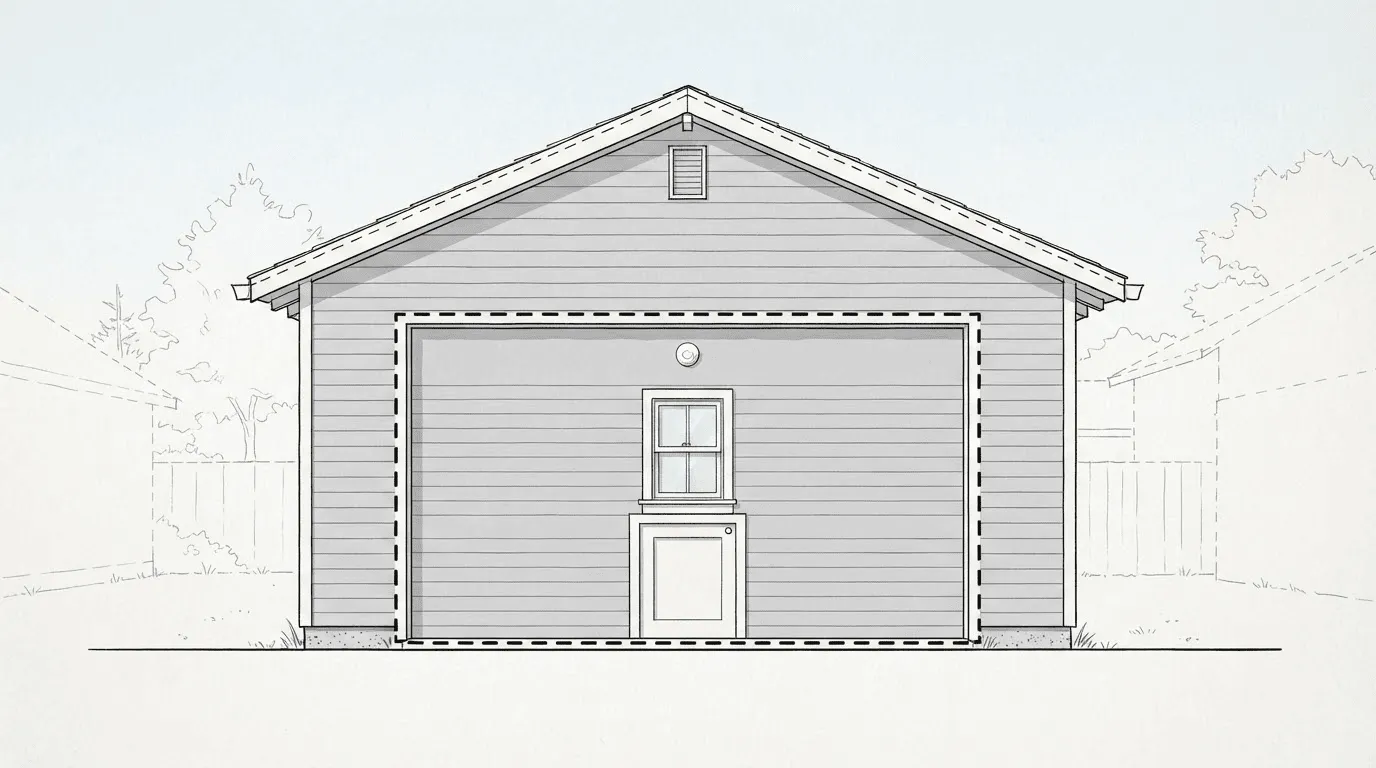
- The rollup door: Many conversions replace the main garage door with a permanent wall and a window. Your specific requirements for this will be verified on site and dictated by the building department.
ADU or JADU?
The classification of your converted garage directly impacts the applicable rules. An attached garage is considered part of the primary residence for JADU purposes. Therefore, an attached conversion of 500 square feet or less within the existing footprint might qualify as a Junior ADU. Conversely, a detached garage in the backyard is usually legalized as a standard ADU. This distinction alters several requirements, and we clarify it early in the assessment.
Understanding the costs
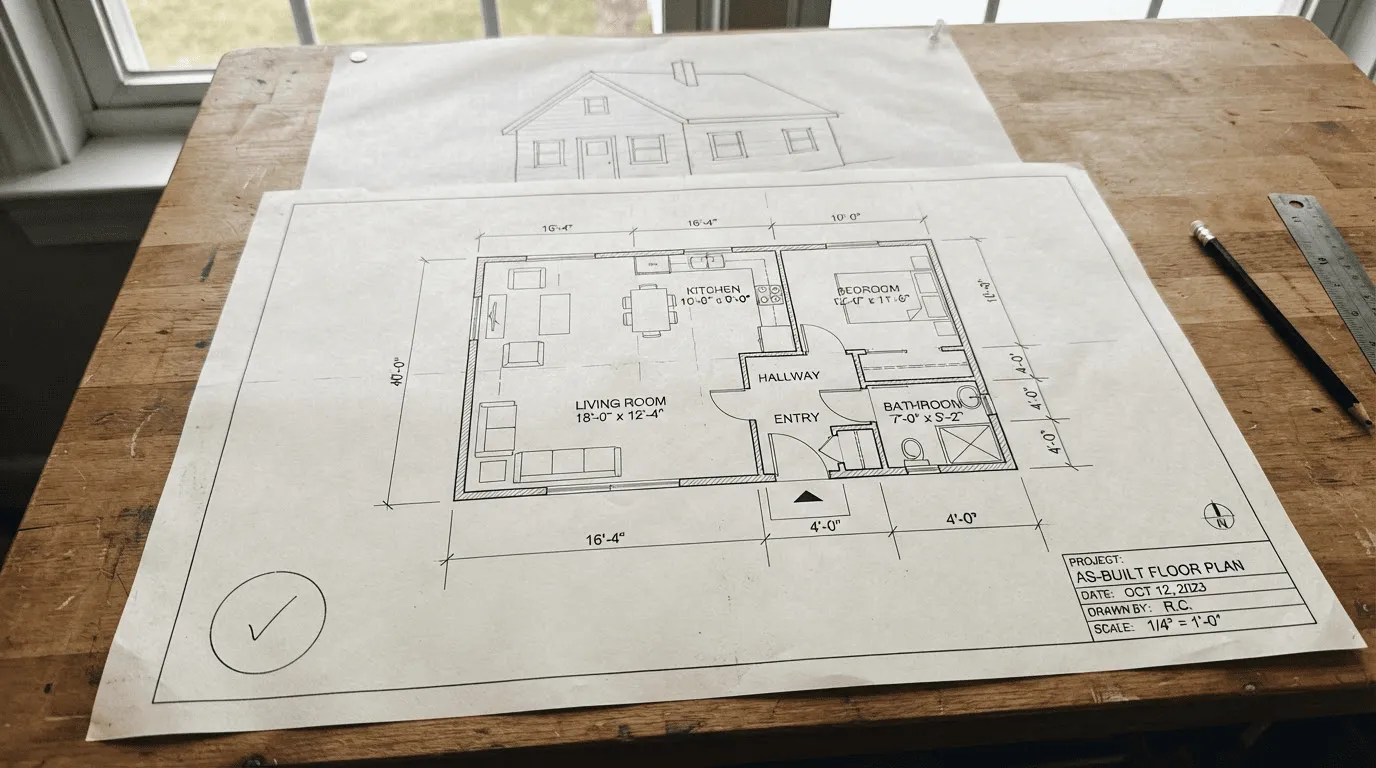
There is no single flat rate for this process. The final price depends on the extent of life safety corrections needed, plus the cost of as-built plans and permit fees. The law works in your favor here. AB 2533 waives impact fees, connection fees, and capacity charges. The only narrow exception applies to utility infrastructure genuinely required to fix a specific health and safety condition. Standard permit and plan check fees still apply. Our report provides preliminary cost ranges tailored to your specific garage. Keep in mind that all figures in an assessment are estimates. Final costs are determined by your chosen contractor and the final city approvals.
Weighing your options: Legalize, revert, or remove
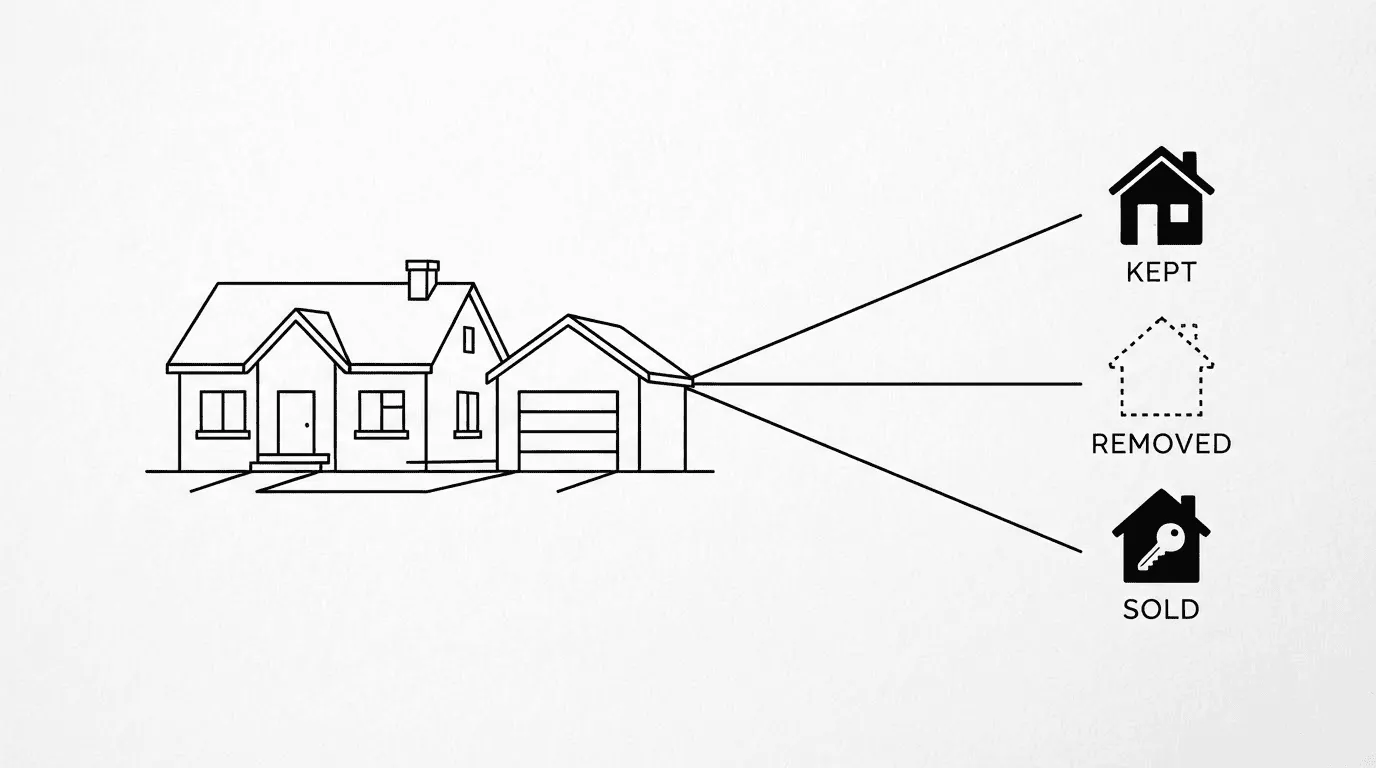
Legalizing is usually the better financial move. Appraisers and lenders count permitted units toward your property value. Unpermitted spaces are excluded from the official living area and must be disclosed during a sale. However, legalization is not your only path. If the conversion cannot be legalized or simply no longer fits your goals, you can revert the space to a functional garage or do a permitted Remove & Restore to clear the violation. Our assessment runs the financials for all these scenarios so you can decide on real numbers. The final call is always yours.
Taking the first step confidentially
For pre-2020 units, the right to a private third-party code inspection before filing any paperwork is explicitly written into §66311.7. The results serve as your personal resource, not a public filing. Permit Amnesty operates on this principle across every assessment tier.
Tiers start at $550, and every tier credits toward the next.