There is usually a path that clears the case and protects the value of the property at the same time. Mapping that path is what a Permit Amnesty assessment does. We evaluate your situation privately, and nothing gets filed with the city until you explicitly decide to proceed.
Why the Lien Has You Stuck
A code enforcement lien is the part that makes this feel impossible. Once unpaid fees are recorded against your title, the lien blocks a clean sale or refinance until it is cleared. It does not go away on its own or transfer to someone else. LADBS is explicit that the current property owner is responsible for complying with the Order. This applies even if previous owners or tenants performed the unpermitted work or created the violation. Ignoring it only lets the fees compound.
Paying the Fines Is Not the Fix
The most common mistake is paying the assessed fees and assuming the problem is settled. It is not. The case stays open and the lien stays on the title until the unpermitted structure is actually legalized or removed and a final inspection signs off. The fees are a lever to force the fix, not the fix itself.
The good news is that correcting the physical violation is what stops the escalation. It also creates the basis to seek a reduction or dismissal of accrued penalties. No one can promise a specific outcome on the penalties because that is decided by the City and the City Attorney where it goes that far. The corrective work is what puts you in a position to pursue it.
Your Options to Clear It
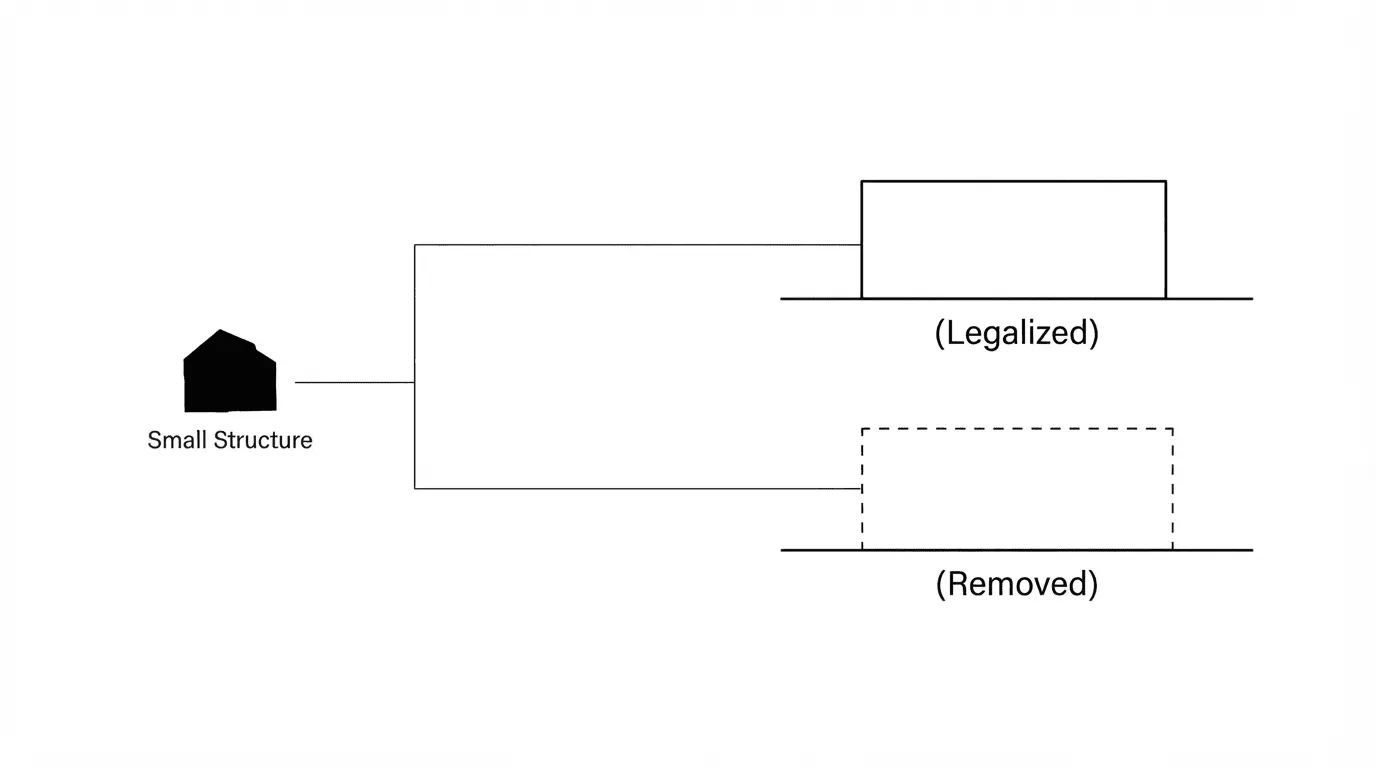
- Legalize it: A retroactive permit brings the structure into compliance, ends the violation, and turns unpermitted square footage into permitted square footage that an appraiser actually counts.
- AB 2533 (pre-2020 units): If the structure functions as an ADU or JADU and was built before January 1, 2020, it is judged on basic health and safety rather than current code. Impact and connection charges are waived under Government Code §66311.7. This is usually the cheapest path when it applies.
- Remove and restore: When legalizing is not feasible, a permitted demolition removes the structure, clears the violation from the record, and leaves a clean title. This avoids the penalties an off-the-books teardown invites, which can include a five-year permit moratorium the City imposes for an illegal demolition.
Why Legalizing Usually Protects the Asset Best
Demolition feels like the clean escape, but it removes whatever value the structure could have carried. Legalizing does the opposite. A permitted unit is counted by appraisers and lenders, can be rented legally, and can support a refinance. This is why tearing it down is often the more expensive choice once you account for lost value.
The exception is when the structure simply cannot meet the bar. This includes a post-2020 addition over a setback line or hazards that cost more to retrofit than to remove. In those cases, removal is the right call. The assessment tells you which situation you are actually in before you spend money.
How the Whole Thing Gets Handled
This is the part that overwhelms owners because the case spans permits, engineering, construction, and sometimes a legal step on the penalties. Missing any piece keeps the case open.
The assessment maps the full sequence for your property. We determine what the structure is, which exit clears the case, what each path costs, and in what order the pieces move. From there, licensed contractor partners handle the as-built or demolition work and the inspections. You can use ours or yours. On the penalty and lien side, a real estate or land-use attorney works directly with you while the construction side runs in parallel. You decide from one clear map instead of assembling it yourself.
Taking the First Step Confidentially
If you are stuck between a lien, a deadline, and a structure nobody will finance, start by finding out what clearing it actually takes.
Three assessment tiers start at $550, and every tier credits toward the next.